Monday, March 26, 2007

Dor - My favorite movie of 2006


Dor (Strings) literally fell into my lap with absolutely no advance notice. My mom sent me this movie before she left for a visit to India. I asked her what it was about and she said to trust her and to just watch it. It sat around for several weeks and since I hadn't heard too much about it, I wasn't in any particular rush to see it. We put it on one night with the idea of watching just part of it and viewing the rest later - 2 hours later we were still watching but not yet ready to part ways with the three characters we had grown to care so much about. Our friend Beth agrees, see her take on the movie here.


The story is a simple one yet grows to be quite complex - two women from very different backgrounds meet through a twist of fate and are faced with the question - just how far are you willing to go to save the one you love? The film's mood can be quite intense at times but under the steady hand of director Nagesh Kukunoor it is also tender, humorous and at times full of pure and unbridled joy. The female leads are played by model turned actress, Ayesha Takia and former Miss India, Gul Panag. The male lead is played by Shreyas Talpade who was also in the director's last movie, the award-winning 'Iqbal'. His relationship with Gul's character is truly one of the sweetest and most tender I have ever witnessed on the silver screen - that it was a non romantic one makes it that much more touching.


It is so refreshing when a movie challenges the viewer with more than the standard 'boy meets girl, boy loses girl, boy gets girl in the end' plot line. Dor is one of those rare 'perfect' movies in which each actor is brilliant in their role, there is not a single line of extraneous dialogue, where the background photography makes one feel as if they were actually there and every scene moves the story along as if one is turning the pages of a book. Watch this movie, encourage your friends (whether they love Bollywood or have yet to see an Indian movie) to watch it and hope that we are lucky enough to have more movies like this made. The song Yeh Honsla is the standout selection and compliments the movie rather than be the extraneous add on for the actors/actresses to model different outfits while dancing in the rain. Not that there is anything wrong with that but sometimes you just don't need all of that - sometimes less is more.

"Dor is my most challenging and dramatic film to date - the pristine locales, the spectacular cinematography and the soaring music all add up to make it a larger than life film. However, at its core, as in all of my films are the human element, the simplicity of the basic emotions that bind us all."
~ Nagesh Kukunoor.

Monday, March 19, 2007

Farewell to O.P. Nayyar :::


The name Omkar Prasad Nayyar doesn't mean much to today's Bollywood fans but his passing on January 28th marks the end of an era for Hindi cinema's golden age. Born in Lahore in 1927, he was almost as famous for what he did not do in Bollywood as he was for his unforgettable melodies. What he did not do was to record a song with the legendary Lata Mangeshkar - ever. He felt her voice did not suit his compositions and instead made a star out of Asha Bhonsle (Lata's younger sister) who was a virtual unknown before becoming his favorite chanteuse. O.P. Nayyar stopped composing songs for the most part in the late 1970's but he remains an indelible part of Bollywood's musical history.

The two selections for today are from Bollywood's golden era and while the songs may have been released over thirty years ago there is a reason why they are remembered as 'evergreen'. The timeless vocals and melodies remain as fresh and vibrant today as they did when my parents heard them via shortwave signals on All India Radio every evening. Like I have said before - if you haven't heard a song before - it's new for you.

The song for today is Uden Jab Jab, a duet by Mohammed Rafi & Asha Bhonsle from 'Naya Daur' starring Dilip Kumar & Vaijantimala. This album won the Filmfare Award for the best soundtrack of the year (1958) and remains one of the sweetest duets that ever graced the silver screen - see it here.


Sunday, March 04, 2007

Do Aur Do Paanch (1980)


Today's review is another joint venture with our friend Beth over at Beth Loves Bollywood. 'Do Aur Do Paanch' is a favorite of mine from 1980 and pure Bollywood comedic gold. The plot is convoluted to say the least and the movie is a typical masala one. In food masala generally refers to a hodge-podge of elements mixed together to add spice to the final product and in movies masala refers to a film with comedy, action and drama - something for everyone.

What I remember on my first (of many) viewings of this movie is that it marked the first time I had heard cursing in Hindi - music to my adolescent ears since it was mostly being done by my hero, Amitabh Bachchan. The competition between the two main actors (AB & Shashi Kapoor) and the way they set each other up for humiliation was a fresh break from the melodramas that were so prevalent during that time. My favorite part remains the food scene (you will know it when you see it) where Amitabh breaks the third wall between him and the audience - just a wink to let you know that he gets it and to not take all this so seriously. As an aside, I met the Kader Khan (who plays the mob boss) at Bombay's Sahar Airport a few years ago and asked him for an autograph. I didn't have any paper on me so I asked him to sign a 1 rupee note that I had - he declined politely saying that it was against his religion to write on money. The things you learn because of Bollywood... For some more thoughts & pictures on this movie check out this post from our friend Maja.

The most famous song from the movie also happens to be my favorite, Tu Ne Abhi Dekha sung by Kishore Kumar (the voice of Amitabh for most of his career). My mama (uncle) who is generally a big critic of Bollywood and decries most of what comes out of there musically as 'crap' told me this song was extremely difficult to sing as it is made up of so many different melodies. Go see it at Jaman which is a new South Asian portal for world cinema. The setup for the song involves AB sabotaging Shashi's attempt to impress everyone with his singing and then singing the song himself. Starring as AB's love interest is my favorite heroine of the time (as well as crush) - Parveen Babi (whose sad life story was recently picturised in another Hindi film but that's for another post).

Saturday, February 24, 2007

Water (2005) - for your consideration

"A widow should be long-suffering until death, self-restrained and chaste"
So begins Water, with a quote from 2000 year old sacred Hindu texts - 'The Laws of Manu'...


Although officially submitted by Canada, 'Water' becomes only the fifth Indian movie to be nominated for an Academy Award. The first winner of that group (in the Best Documentary category) was 'Born Into Brothels' last year and I hope 'Water' will continue that tradition. It combines a controversial story, tremendous acting performances and beautifully shot scenes making it one of my two favorite Indian movies of the year (my favorite one will be reviewed in the next few weeks). 'Water' is one of those rare movies that captures you from the first scene and doesn't let you go until the final one. Each line of dialogue is perfectly written and every actor delivers a stunning performance. The simplicity of the sets adds to the grace and power of the film's message.

The shooting of 'Water' was interrupted by Hindu fanatics for 5 years as they objected to the subject matter of how widows are treated in Indian society. A crowd of 2000 rioters burned down the sets in Benares and issued death threats against all those involved in the making of the movie. The production eventually was moved to Sri Lanka where filming resumed under a fake movie title and the film was finally finished 5 years after it was begun. The three female leads all provide memorable performances but none more than Sarala, the eight year old child who plays Chuihya. Sarala had never acted before making this movie nor did she speak a word of Hindi - astonishing considering how naturally she disappears into her role.

My favorite song from the movie is the haunting Piya with music composed by A.R. Rahman (who has said this is the most artistically complete album he has ever created). So tune in on Sunday night to see if the most successful Indian movie to be released in the US (and still unreleased in India) can become the second one to take home the Oscar gold.

Tuesday, February 13, 2007

10 years on...

Sometimes art imitates life and sometimes life imitates, well, Bollywood. Allow me a moment of self-indulgence to celebrate my 10th wedding anniversary. Now I could wax poetic about how much we care about each other (we do) or how we couldn't imagine our lives with anyone else (we couldn't). But since this is a blog about Bollywood and the music inspired by it we will keep the lessons we have learned over the past ten years limited to how Bollywood has taught us to go about finding one's true 'yaar' (best friend/lover)...


-A true love will wait for you (even if she doesn't say it out loud) while you are imprisoned in a foreign jail somewhere for 20 some odd years - Veer Zaara.


-A true love will dance on broken glass in the stifling heat surrounded by really bad bandits to save your life - Sholay.


-A true love should live every day like it's their last because it really could be - Mohabattein


-A true love will spurn the advances of a very pretty British memsaheb for his spunky small town village girl with a heart of gold - Lagaan.


-A true love should be your best friend. The one that knows all about you but loves you anyway. Just don't let her get away as you go after the new hot babe at school who can recite religious poems and wear the latest fashions with equal conviction - Kuch Kuch Hota Hain. (Or you are going to have to wait for some REALLY tragic circumstances to get your true love back.)


The two songs presented today are from our wedding day and still resonate with very special meaning for us. The first song is Yeh Dil Aur by Lata from the movie 'Prem Parbat' - it is the song that was playing while the flower girls filed into the wedding hall. The second song is Aankhon Mein Humne by (who else?) Kishore Kumar & Lata from the movie 'Thodisi Bewafaii'. It was our first song that we danced to at our reception - the lyrics & music are pure poetry.

Tuesday, February 06, 2007

Guru (2007)


As hype goes, 'Guru' certainly had it's share of it and for good reason. It was made by one of the most preeminent directors of our day (Mani Ratnam), with music by one of the industry's finest composers (A.R. Rahman), lyrics penned by a legendary poet (Gulzar) and of course headlined by the hottest movie star couple of the day on & off-screen (Abhishek Bachchan & Aishwarya Rai) - the result? A potentially great movie that ultimately collapsed under the weight of it's own ambition. The movie is loosely based on the life of Dhirubhai Ambani and tells the story of how an ordinary man became one of the richest and most powerful men in India. The performance of AB was very good as he completely disappeared into the role (looking eerily like Hollywood actor Alfred Molina). However the finest acting job was by none other than the 'Disco Dancer' star himself, Mithun Chakraborty. His role in the film was unlike any he had undertaken before and served as a validation of his long and storied career in Bollywood. But while the plot was intriguing, the story did not flow, and in the end, the audience was left with more questions than answers.


In the final analysis I would recommend this movie not because it was a great film but because it touched me in a very personal way. It allowed me to experience the India of my parent's youth and my imagination. The uncrowded and unpolluted streets, the fields being tilled by hand, the smattering of my native Gujarati being spoken every so often and the simple way of life uncluttered by the litany of modern conveniences. The train station scene in which Guru is being seen off by his family was particularly affecting for me as it took me back to what it must have been for my father when he came to America. The picture above is of that actual day in 1971 when he did and that is me he is holding. My mother is to his left and surrounding him are various friends that we keep in touch with till this day. The look in his eyes says it all (much as Guru's did in the film) - that dreams are not worth having unless you are willing to go out and live them.

The music selections are Barso Re that depicted the India of that era so very nostalgically and gave Aishwarya her signature song for the movie. The other song is Tere Bina and is used throughout the movie at various points. It's background vocals are sung by none other than A.R. Rahman himself and it is easily the best song on the entire soundtrack.

Wednesday, January 31, 2007

Shaan (1980)


Today's songs are being accompanied by a review of the movie from our good friend Beth over at Beth Loves Bollywood. Even though the movie being reviewed is from 1980 - like all great art, the first time you experience it - it is new for you.


It was inevitable of course that five years after the mega-success of 'Sholay' (Bollywood's tribute to the spaghetti western) the powers that be would get together and attempt to do the same tribute for 007. The result was 'Shaan' which took over 3 years to make, brought back many of the same people that made 'Sholay' and was one of the costliest films of it's time (barely making back it's original budget). The movie itself is just one breathless sequence of events that combines romance, buddy flicks, great songs, implausible plotlines and of course the thing that no Bond picture would be complete without - a signature villain. Seeing Kulbushan Karbhanda now cannot be done without picturing Mike Myers' famous Dr. Evil from 'Austin Powers'. But in his debut film, Karbhanda handled the role perfectly and proved to be more than just a caricature in his alligator infested lair. Amitabh is his usual uber cool hero - fans of AB 2.0 should watch this film to see what made his dad such a star. This film also stars Shashi Kapoor (brother of Raj & Shammi) and my favorite heroine from the 80's, the angelic Parveen Babi.

Try to make this movie today and you can just imagine the pitch... "Ummm - I need the biggest actor of the day, an unlimited budget, great songs, melodrama, side-splitting comedy, action sequences never attempted before in Indian cinema - and oh, did I mention the lead actor will have to wrestle an alligator in the final sequence?". Yes, this movie (like all great Bollywood masala films) is like many movies rolled into one - but with all cylinders firing. The end result is inspired madness that will keep you entertained until the final reel. At times the editing and plot development will challenge your logic but the film has so much energy and enthusiasm you just won't care.

R.D. Burman provided the music for this movie and is universally regarded as one of the true legends of Indian cinema inheriting his talent from another legend - his father S.D. Burman. The song for today is Janu Meri Jaan. The song unfolds in a scene in which our 2 heroes have to get our 2 heroines back after being caught in a lie. The setting? Try a double decker bus then a two seater bicycle followed immediately by a machine gun shootout, view it here.

Wednesday, January 24, 2007

Thoughts on 'Umrao Jaan' and 'Don'


I was very apprehensive about seeing both of these movies having such strong affection to their respective originals. There are two prevailing schools of thought on remaking classics - one says to leave well enough alone & one says that it will help the original gain a whole new audience. I used to be in the latter group until I realized that most Desis in college today had never seen the original to either of the remakes being discussed today.

Watching 'Umrao Jaan' was like seeing a painting come to life. The cinematography and colors captured India circa 1850 like few other movies before. Aishwarya Rai (looking ethereal) proved to be a formidable Amiran and despite mixed critical reviews of the film, her acting was universally praised. Abhishek Bachchan holds his own against his future bride to be as the Nawab (prince) and gives one of his strongest performances to date. The costumes & dialogue were said to be painstakingly done to recreate Lucknow of that era. Especially lauded was Ash's command of the Urdu language - not bad for a girl from the South who grew up speaking Tamil! The song from the movie is 'Salaam' - see it here. Official movie website here

'Don' on the other hand was something that didn't need to be remade. It's not that the movie was that bad (it wasn't) or that SRK didn't do an adequate job of playing Don (he did). It's that Amitabh so made this role his that no one could do it better and if anyone tried he would just be compared to AB - an unfair thing to say the least. The remake was quite faithful - not only copying the story, but also some of the most famous dialogues and in the ultimate homage, remaking two of the original songs. But while watching it I found myself remembering the way AB said the line or acted the scene - and wishing I was watching the original instead. The movie had some substance - but unlike the remake of 'Umrao Jaan' - it had no heart. The song from the movie is Maurya Re - see it here. Official movie website here.

Sunday, January 07, 2007

Kabhie Kabhie (1976) - Part II


The second set of songs from this movie are sung by Kishore Kumar & Lata and given life to on the screen by Rishi Kapoor & Neetu Singh. These songs are much more energetic than the songs from Part I and match the mood of the second half of the film as well. The first half told the story of unrequited love from the viewpoints of the parents and in the second half that shattered love is left for their children to mend and heal. The two stars mentioned above fell in love (onscreen and in real life) during the shooting of the movie and got married soon after it's release.

Both of these songs, Tere Chehere Se & Tera Phoolon Jaisa Rang, helped the lyricist and the musical director win Filmfare Awards (India's equivalent of the Oscars) for 'Kabhie Kabhie'. See the songs here & here. Interestingly, both of these songs were shot in Kashmir during different seasons showing the beauty of this land in more than one mood. Watching these videos, one can almost feel the two stars falling in love - little wonder that they were one of the most popular screen duos of their day.

Tuesday, December 26, 2006

Kabhie Kabhie (1976) - Part I


Few movies have such universal appeal across generations as the 1976 classic, 'Kabhie Kabhie'. The songs for the movie log in at #13 according to the BBC's 'Top 40 Bollywood Soundtracks of all time'. Parents & their kids alike know the songs and the songs resonate with even those Desis that have not been bitten by the Bollywood bug. In short, a movie like 'Kabhie Kabhie' comes along only so often in Hindi cinema and it's not only due to all six of it's stars turning in career-defining roles. It's also due to the fact that there are few movies that boast of such a rich haul of timeless lyrics, lilting music, poetic dialogue and a theme that explores the many aspects of romance - both young and young at heart.

To date, Yash Chopra maintains that 'Kabhie Kabhie' was an art film in commercial garb. It combined many big stars of the day with roles that audiences were not used to seeing them in and of course - it had those timeless songs. Yash Chopra's financer and friend Gulshan Rai even told told him after watching the film that he felt he had wasted his money and that the film had little chance of success. But Yash did not waver in his support & 'Kabhie Kabhie' went on to become the biggest hit of the year.

'Kabhie Kabhie' ranks among my 10 "desert island soundtracks" meaning there are entirely too many great songs to just select 1 or 2 favorites. Thus there will be two songs for today and two more next week (all presented in chronological order of how they appear in the movie). The 1st song is Main Pal Do Pal by Mukesh and is preceded by the now famous introduction to the movie by Amitabh Bachchan (see the song here). The 2nd song is arguably the most famous love song in all of Indian cinema, the title song of Kabhie Kabhie itself - just perfect in it's lyrics, music and vocals. The video shows however that the lyrics belie what is really happening on screen.

Monday, December 11, 2006

Devika Rani - Bollywood's First Lady


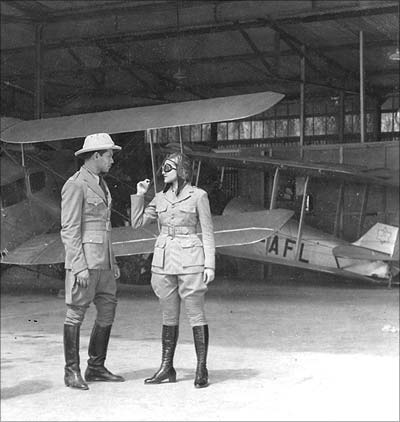
This year marks the 70th anniversary of one of the landmarks of Indian cimema, 'Achut Kanya' (The Untouchable Girl). The star of the movie was Devika Rani, co-founder of Bombay Talkies and an icon of Indian cinema herself. She was the grand niece of the legendary poet & Nobel Laureate Rabindranath Tagore who was knighted but resigned his commission out of protest to British rule in India. Devika herself was no stranger to awards being the first ever recipient of the Dadasaheb Phalke Award - annually given for lifetime achievement to Indian cinema and the Padma Shri Award for her contribution to the arts.

Devika Rani went to England in the 1920's to study architecture and also ended up studying drama & music at the Royal Academy of Drama. It was there that she met her husband (Himanshu Rai) who was an Indian actor and film producer. Together they collaborated on one of the first Indian talkies 'Karma' in 1933. While on their honeymoon in Germany they became well acquainted with many German filmmakers and technicians who came to Bombay to usher in Bollywood as we know it. One of those, director Franz Osten, was responsible for her most memorable role in 'Achut Kanya'. Starring opposite her was Ashok Kumar (older brother of Kishore) who incidentally was cast after the original hero eloped with Devika. However, she did return to finish the film.

The earliest (and still one of the few) films to deal with the Dalits/Untouchables, it was the fledgling Bombay Talkies first bonafide hit. This film about a Brahmin boy and an Untouchable girl who fall in love generated quite a bit of controversy during the same time that Mahatma Gandhi was crusading for the rights of the Dalits in Indian society. Gandhi gave many lectures regarding this issue and fasted for the Dalit's rights to enter temples, an act that resulted in many death threats against him. Gandhi declared that there is no such thing as an untouchable in the holy writings as the very idea conflicted with humanity and therefore could not be the divine truth. Despite many attempts to reform this issue it still persists in modern India to this day. See one innovative idea to help with improving the Dalit's lives here

The songs for today are not from the movie itself but rather are inspired by it. The first one is Phoolon Ke Rang sung by Kishore Kumar from the movie 'Prem Pujari'. Devika often teased her friend and co-star Ashok about how much a better singer his younger brother Kishore was and often listened to his songs on her movie sets. The second song is from another recipient of the Padma Shri Award, Diwaliben Bhil. She originally hails from Junagadh, Gujarat and is a member of the Koli tribe. Diwaliben also happens to be a member of the lower castes but this did not stop her from achieving international fame & success. The song is a traditional Krishna Bhajan but it is made very special by her rendition of it.

Tuesday, November 28, 2006

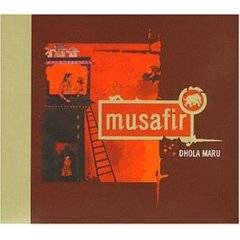
Travelers from Rajasthan - 'Musafir'


The meaning of 'Musafir' is traveller or voyager and if you allow them - this band from the Indian state of Rajasthan will take you on one amazing music trip. The musicians of Rajasthan are considered the fabled original gypsies (since proven true by linguistic & DNA evidence) and consist of 11 singers, dancers and instrumentalists who have the rare ability to function as one. Rajasthan's musician castes are predominantly Muslim, dating back over 500 years to when the Moguls first invaded India. The kings (or maharajas) tended to hire the best local musicians and many of them converted to Islam in order to work in the court. They adopted the name Khan and passed their new faith onto their descendents.

The typical Rajasthani band reflects only a single ethnicity yet Musafir is a secular mix of Hindu, Muslim, Gypsy and Sufism. Their songs build slowly with the harmonium or sarangi giving the tune as the singer incants the scale. The percussion then begins and more singers begin the melody with other instruments blending in. The song itself may pass through as many as thirty changes in mood and tempo before climaxing with all musicians joining in at the end. Whatever the song, tempo or improvisation - the eleven group members manage to communicate internally producing the effect of a singularly mesmerizing entity. See an article on the band here

Moria Badnawa is an instrumental that interprets a famous folk song about a peacock from the village of Badnawa. The song follows the peacock through it's day - first singing as the sun rises, opening his tail as the sun continues it's trek across the sky until it finally attracts a female peacock as dusk arrives. Listen as the song begins with just 1 instrument and reaches it's crescendo as each subsequent one is added in perfect harmony with the other. The song Halleriya means lullaby and is sung at the celebrtion for a new birth. It represents not just the mother and father's happiness but the whole village celebrating the arrival as well.

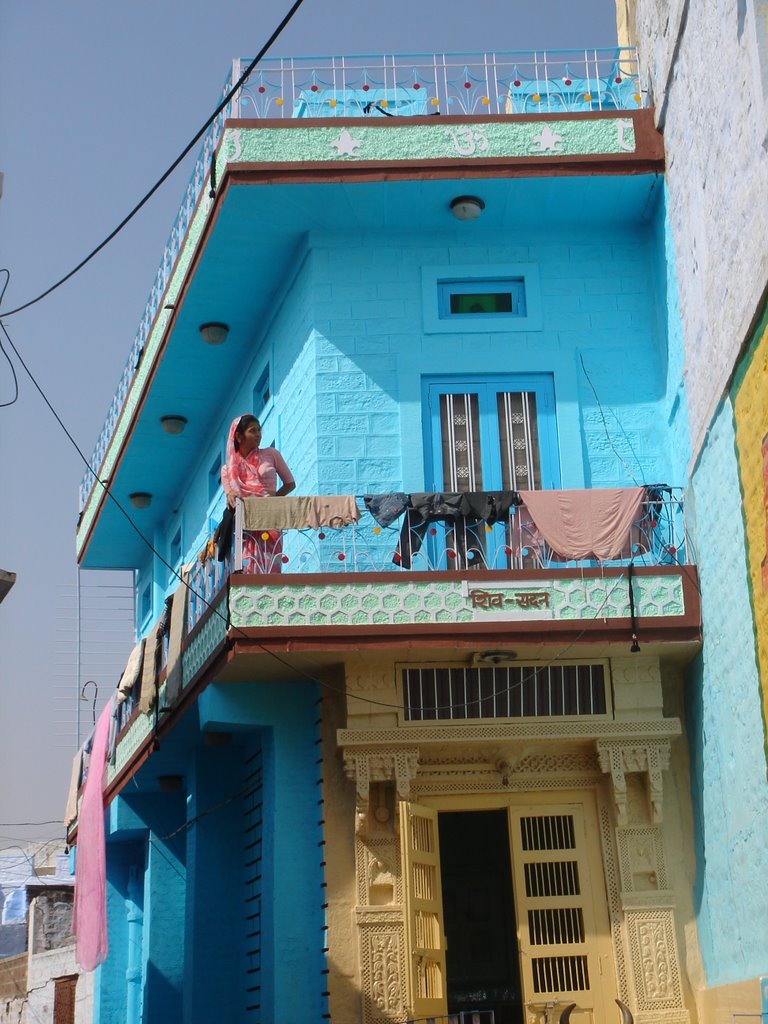
For more pictures of Rajasthan - click on the link 'Nilong's Rajasthan Collage' from our trip there in 2005.

Sunday, November 12, 2006

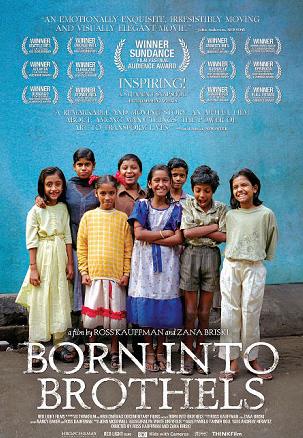
Born Into Brothels (2004) - India's Oscar Triumph


Officially speaking, India has had three movies that have been selected by the Academy of Motion Picture Arts and Sciences (Oscars) but none has ever taken home the golden statue. That drought ended last year - not with a big Bollywood production or even an art film but with a small documentary - 'Born Into Brothels'. In 1995 New York photojournalist Zana Briski went to India to document the harsh conditions for women in a developing country. She was interested in female infanticide, child marriage, dowry deaths and widowhood. A friend took her to Sonagachi, a red light district in Calcutta and "from the moment I stepped foot inside that maze of alleyways, I knew that this was the reason I had come to India." Briski developed close relationships with the women and then with their children.

Briski noticed the children were fascinated with her and her photography and got the idea to teach them to document their lives with their own photos. She chose children who were eager to learn and gave each a point and shoot camera to use. Even though Briski had never used a video camera before, she decided to film the process. What happens when the line between merely documenting tragedy and doing something about it become blurred?

The answer lies in this poignant story of how these children are taught to visually record their lives in the squalid margins of society. We witness the frustrations, victories and disappointments that ensue in a world where criminals' children are stigmatized and not accepted into private schools. These students come from several generations of sex workers and drug dealers where the girls constantly face the imminent specter of 'joining the line' to earn money for the family. The children have witnessed and experienced things that most of us never even have to think about. They are treated as little adults who have to cook and clean from early morning until late at night while neighbors hurl profanities in their direction throughout the day. Just when the movie starts getting too heavy the children get an unexpected advocate to help change their lives - themselves. Don't miss the special featurette on the DVD that shows their lives 3 years later which is as moving as the film itself.

The 2 songs for today are from the soundtrack of the film. The 1st one is a simple yet elegant classical composition consisting of only two instruments - the Tabla & Flute. The 2nd song is Gopala by Krishna Das, a musician originally hailing from New York. Das is an accomplished singer in the Kirtan style of chanting (invoking the name of god multiple times). Used by many religions throughout India, Kirtan is one of the oldest forms of meditiation whose origins trace back over 500 years. While it is somewhat strange to hear ancient Hindu chants sung by a self-described 'ordinary white guy lucky enough to have found India',the resulting music will surprise you. To learn more about Krishna Das go here, to learn more about Kirtan go here.

Thursday, November 02, 2006

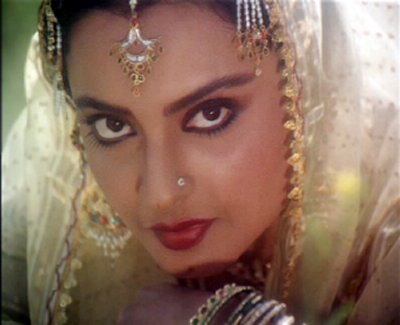
Umrao Jaan (1981)


The sequel to the timeless saga 'Umrao Jaan' opens tomorrow and a whole new generation will see the often duplicated story of the courtesan with a heart of gold. Rekha's portrayal of this doomed heroine earned her the National Award for best actress back in 1981 and is considered her finest performance. Whether Aishwarya captures that same magic with Abhishek Bachchan remains to be seen. This is the 2nd of 3 big remakes of 2006 (aka the year my Bollywood memories were pillaged) that began with 'Don' and with 'Sholay' left to go. Call me old-fashioned but some things are timeless and need to remain untouched - tomorrow will tell if perfection can indeed be improved upon.

In Ankhon Ka Masti & Dil Cheez Kya Hai are the 2 evergreen classics from the movie and are both sung by Asha Bhonsle (Lata's younger sister). The lyrics, music & style of both songs made them #1 hits then and both remain classics to this day. See Rekha recreate life in 19th century India here and here.

Saturday, October 14, 2006

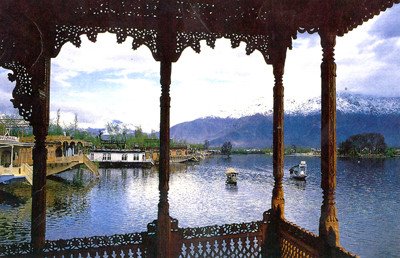
Kashmir - Paradise Lost


"If there is paradise on Earth, it is here, it is here, it is here".

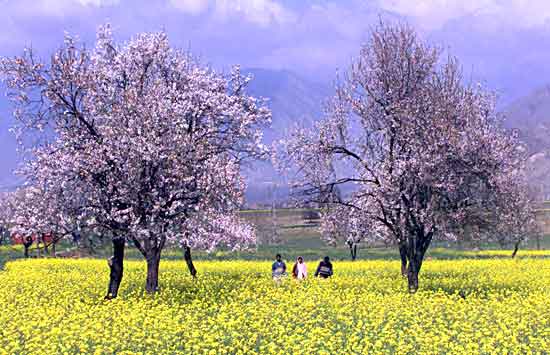
An Urdu poet once summed up the eternal beauty of Kashmir in these lines, just one of many enchanted with this timeless land. The vale of Kashmir is unique in that nature has endowed Kashmir with exotic beauty - one which is reflected in its picturesque landscapes, lush green forests, beautiful rivers and waterfalls, snow covered mountains, barren cold deserts and a range of exquisite flora and fauna. The northern most part is that of Ladakh which can only be described as the 'The Last Shangri-La' or 'Little Tibet'. Ladakh is home to a number of monasteries and various sects of Buddhism. Often compared to Switzerland, Kashmir was once the most the popular honeymoon spot in all of India & a favorite summer retreat of the British Raj.

To understand why Kashmir is now more famous as a battleground than paradise on earth one needs to go back to the events of August,1947. In the summer before Partition, each state that comprised India was given the choice to join either India or Pakistan. For the most part (with the exceptions of Punjab & Bengal which were mindlessly bisected) they chose one or the other based on religious grounds - but the princely state of Kashmir was different. The Hindu ruler, Maharajah Hari Singh, whose subjects were 75% Muslim - did not wish to join either country and wanted Kashmir to stay an independent state. Pakistan organized a covert attack on his palace by Pathani tribesman in order to force his hand but he got word of it literally hours before their arrival. The Maharajah contacted Prime Minister Nehru in a panic & subsequently signed a pact to become part of India. He was thus given protection by the Indian government against the Pathans and Kashmir officially became a part of independent India.

This seemingly small event has pushed both countries to war three times since then & caused the insurgency that began in 1989. It has resulted in the death of thousands of innocent civilians, the ethnic cleansing of the Kashmiri Pandits who have been forced out of their ancestral homeland and are now refugees in their own country and the desecration of a once proud land. India claims Kashmir as an integral part of it's secular vision & Pakistan wants the people of Kashmir (not a ruler) to choose their future. The UN has been unable to assist in a compromise as both countries refuse to make any concessions. Which side is right is a matter of personal choice but both nations must answer to the tragedy that has befallen this beautiful region and it's people.

The music of Kashmir is as varied as the people that populate it. The 1st song is Bhoop from the album 'Call of the Valley'. Released in 1968, it remains the best selling Indian classical music album ever released in India & depicts the day of of a Kashmiri shepherd from morning to night. The album is predicated on the deliciously simple (yet at the time radical) idea of marking the passage of the day with ragas appropriate to the hour. The 2nd song, Ye Kashmir Hai, is from the movie 'Bemisaal' starring Amitabh Bachchan & Rakhee. It is sung by Kishore Kumar & Lata Mangeshkar.

I highly recommend the book 'Freedom at Midnight' for more information on this matter as it is one of the most enthralling books based on true events I have ever read. Written by French authors Collins & LaPierre, this book is must reading for any person of South Asian descent.

Monday, October 02, 2006

Farewell to Pramila - India's 1st Miss India


Bollywood said goodbye on August 6th to the first ever Miss India, Pramila (born Esther Abraham). Crowned in 1947, she entered the world of show business after leaving her conservative Jewish home in Calcutta at the age of 17. Her first job was to keep cinema audiences quiet during the 15 minutes it took to change the reel in the single projector of silent films. She made a name for herself in many films as an actress, stunt woman and India's first female producer. Pramila never shied away from controversy - her song Choli Ki Andar caused a fervor with censors long before Madhuri Dixit’s Choli Ke Peeche did.

Her stubborness to conform to Bollywood's all-boy club rules led to a fascinating offscreen life as well. She eloped with a theater director soon after leaving home, married the Bollywood hero Kumar, stayed in India after he decided to migrate to Pakistan in 1963 and was accused of being a Pakistani spy because she went there often after partition (to visit her father & promote her films).

Her last film role at age 92 is in the just released 'Thaang', directed by Bollywood actor Amol Palekar. It opened the Brisbane Film Festival & was shot simultaneously in Palekar's native Marathi as well as English. I couldn't find a song from any of Pramila's movies, thus today's song is from a movie starring another former Miss India - Simi Garewal. Ja Ri Pawania is sung by the always seductive Asha Bhonsle (Lata's younger sister). An enchanting & beautiful song - just the way Pramila would have liked it.

Sunday, September 17, 2006

Don (1978)


The remake of 'Don' starring Shah Rukh Khan releases in exactly one month from today. My 1st reaction to hearing that news was... Why? Why remake the 1978 classic starring none other than Amitabh Bachchan? Could Farhan Akhtar (whose father co-wrote the original) really direct this movie any better than what it was? I thought about the remake of 'Charlie & The Chocolate Factory' and the similiar feelings of contempt I had before watching it. Gene Wilder was brilliant in the original - there was no chance of Johnny Depp improving on perfection. And Depp didn't - but he was still brilliant in the remake without spoiling our memory because he made the role his own. Plus, millions of kids got to see the movie for the 1st time for no other reason except that it was 'new' and the original enjoyed a whole new audience as well. So to that end I wish Shah Rukh the best of luck & hope he tries to do the same - and not try to improve on the genius of Amitji.

I recently saw the original 'Don' on the big screen with my buddy Gurmanjit in Austin, TX. It was playing at the Alamo Drafthouse as the opener to their 'Tribute to Bollywood' week. The theater was housefull & as the lights dimmed on the audience (90% non-Desi), the palpable anticipation in the air gave way to the psychedelic opening. At that point everyone realized they were in store for something very special indeed. Sure, the audience had to be goaded into the fun by the both of us talking back to the screen (ala 'Rocky Horror Picture Show') during certain scenes. But we knew they got it when the movie received a standing ovation as the end credits rolled.

'Don' was born of concentrated 1970's extract... as one critic put it "it's cheesier than a McDonald's cheeseburger where they forgot to give you everything but the cheese - and when you go up to the counter to complain, they just give you more cheese . But even though you know it's probably going to make you fat and give you spots, you can't help going back for more. 'Don' just happens to be the rarest of substances - nothing but pure entertainment." It is so over the top that you have no choice but to sit back & just enjoy the ride. The plot is just an excuse to give the audience: Amitabh in one of the best double roles ever with dialogue only he could pull off, the gorgeous Zeenat Aman in green pant-suits doing spectacular kung fu, goondas with wide lapels in polka-dot suits, crazy camera angles, incredible car chases and last but not least - the tunes. 'Don' has it all & more - did it really need to be remade? See the trailer for the remake, watch the original & then judge for yourself. Next thing you know they will be remaking 'Umrao Jaan' & 'Sholay'...

Khaike Paan is a bonafide classic still lovingly overplayed at any Desi wedding reception to this day (including mine where my friends did a dance to it as well). The dapper Don hanging out with his village kinfolk while extolling the pleasures of paan AND bhang can be seen here. The Kishore/Lata duet, Jiska Mujhe, is the other great song from the movie. See Zeenat Aman looking simply breathtaking, Amitabh being seduced by her while drinking a martini & a scorned extra with the most unfortunate hairdo I have ever seen here. The original 'Don' - guilty pleasures never felt quite this good.

Sunday, September 10, 2006

2 songs from 2001


Everyone remembers what they were doing 5 years ago today. First came the feelings of disbelief while watching the images on TV. Then being glued to those same television sets for weeks afterwards, finally becoming too numb to watch anymore. Plenty of people have their opinion on the state of the world today because of what happened (from the war in Iraq to getting to the airport early because you can't carry on bags anymore) - thus I won't bore you with mine. There is plenty of media coverage on this topic for anyone interested.

The 2 songs for today were released just prior to the events of 9/11. The films they hail from aren't all that memorable but the songs remain favorites of mine to this day. Just reminders (at least for me) of life in simpler days. The 1st selection is Kismat Se Tum, an absolutely incredible song from the movie Pukar. It was (and still is) the only Bollywood song filmed on an Alaskan glacier. Madhuri Dixit has said that it was one of the most difficult shoots of her life - see her lips actually turn the colour of her chiffon blue sari here. The 2nd selection is Chalo Chale Mitwa, a sweet duet from the movie Nayak - it's safe to say Rani Mukherjee wasn't nearly as uncomfortable during the filming.

Monday, September 04, 2006

Slide Guitar - not just for the Delta blues


While American bluesmen would probably like to believe otherwise, the slide guitar has been developed in many cultures. The earliest reports of Hawaiian slide guitar come from 1876, while Indian culture can trace the use of a slide instrument upon strings back to the 11th century. The distinctive sound of the slide guitar is an intrinsic feature in blues, Hawaiian and Indian music. On Mahima, these traditions meet in the capable hands of two of the world’s greatest slide guitarists, Debashish Bhattacharya and Bob Brozman. In the process, the two have created a true hybrid, a spectacular union of guitarists on a very unique album.

Indian raga music thrives on improvisation. No two performances by the same musician produce the same result. For a musician with substance the sky is indeed the limit. Debashish Bhattacharya's improvisations within the framework of a raga or within the limitations of the instrument he plays become a novel experience for himself as well as his listeners. Some artists go beyond what is known and open new horizons in the field of their work - this is one such artist.

Both of today's song selections have the artist's sister, Sutapa, accompanying with vocals in her native Bengali. The 1st one, Loomba Re Loomba , is a folk song from the northwestern desert state of Rajasthan. Here the camel is a primary mode of transportation and thus considered a revered member of the community. The women of Rajasthan sing this song at festivals where they decorate the camels with traditional jewelry. The 2nd one is Sujan Re and it's meaning is a term of endearment. It is the song of a newlywed bride whose fisherman husband has gone to sea & not returned. As she sings, her sense of invincible love gives way to the realization of lost hope. You don't need to know a word of Bengali to appreciate the sad beauty of what she is feeling - just close your eyes & let her voice tell the story.

Monday, August 28, 2006

Farewell to Hrishikesh Mukherjee


Bollywood said goodbye to legendary director Hrishikesh Mukherjee who died in his sleep at age 84 in Bombay on August 27th. His biggest hits (Anand, Mili, Abhimaan & Gol Maal) are from the 70's and not well known to current Desi film fans. The films he made were deceptively simple in construction (no violence or silly song/dance routines) but rich in emotion. He was known as the common man's filmmaker because anyone could connect with the stories he told. However, the actors in his movies often gave career defining performances under his direction. Amitabh Bachchan stated "his knowledge of the craft (neither too artistic nor too commercial) was so immense that we just left ourselves in his hands. We never heard any scripts, never heard any stories - we just showed up." Amitji's 1st film with Jaya (after they were married) happens to be my favorite Hrishikesh Mukherjee movie - Abhimaan (see post from 7/17/06).

He is a recipient of the Dadasaheb Phalke Award - an annual award given by the Indian government for lifetime contribution to Indian cinema. It was instituted in 1969, the birth centenary year of Dadasaheb Phalke, considered the father of Indian cinema. He is also a recipient of the Padma Vibhushan, India's 2nd highest civilian honor.
The 1st selection for today is from Kal Ho Naa Ho, which was a remake of Hrishikesh Mukherjee's Anand (arguably Rajesh Khanna's finest role) - the song, Kal Ho Naa Ho. The 2nd selection is from Mili, Amitabh & Jaya's 1st movie after their marriage - the song, Maine Kaha Phoolon Ne. Ironically, both of these very upbeat songs hail from otherwise tragic movies. And therein lay the genius of Hrishidada - to get us to feel empathy for his characters - while the ordinary filmmaker would be satisfied with mere sympathy for them.